


Media Inclusion: genesis, paradigms, and themes

https://doi.org/10.21453/2311-3065-2025-13-4-13-21
Abstract
In this article, a new concept is introduced into the problematic field of sociology – «media inclusion»/«mediainclusion», which means the unifying information space in the form of open data contained in the information systems of the Russian Federation, providing free and equal access to it to all users of media. Media inclusion is not limited to simple involvement in information processes, but presupposes the presence of intermediate, programmed links that allow information to be processed and influenced by self-organizing entities operating through embedded programs. The levels of media inclusion in the modern socio-cultural space are identified, theoretically and empirically substantiated.
About the Authors
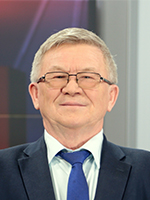
F. I. Sharkov
Russian Presidential Academy of National Economy and Public Administration
Russian Federation
Russian Federation
Felix Izosimovich Sharkov – Doctor of Sociological Sciences, Professor, Honored Scientist of the Russian Federation, Professor of the Department of Sociology MGIMO University of the Ministry of Foreign Affairs of the Russian Federation, Head of the Department of Public Relations and Media Policy, Deputy Dean of the Faculty of Journalism of the Faculty of Journalism
76 Vernadsky Ave., Moscow, 119545
T. V. Andrianova
Kursk State University
Russian Federation
Russian Federation
Tatiana Vladimirovna Andriyanova – Doctor of Sociological Sciences, Associate Professor, Professor of the Department of Sociology
29 Radishcheva St., Kursk, 305004
References
1. Akhiezer A.S. Russia: criticism of historical experience [Text]. Moscow: Novy chronograf, 2008.
2. Bell D. The coming post-industrial society: the experience of sociological forecasting / edited by V.L. Inozemtsev. Moscow: Academia, 2004 (in Rus.).
3. Andrianova T.V. A network form of implementation of social projects for children with disabilities on the basis of cultural institutions of the Kursk region // Proceedings of the Southwestern State University. The Economics series. Sociology. Management. 2018. Vol. 8. No. 4 (29), pp. 262-273 (in Rus.).
4. Andrianova T.V. The quality of services provided by special libraries for the blind in the regional dimension // Logos et Praxis. 2018. Vol. 17. No. 3, pp. 109-117 (in Rus.).
5. Andrianova, T.V. Managerial influence in the socio-cultural sphere in the era of digitalization: theories and methods // Digital society – a new format of social reality: structures, processes and development trends: proceedings of the All-Russian Scientific Conference XIV Kovalevsky Readings on November 12-14, 2020 / Editors: N.G. Skvortsov, Yu.V. Asochakov. SPb.: Scythia-print, 2020, pp. 246-247 (in Rus.).
6. Boltz N. Your inner outside and your outer inside. The mythical world of electronic media // Logos. 2015. Vol. 25. No. 2 (104), pp. 168-16 (in Rus.).
7. Castels M. The Information Age: economics, society and culture / translated from English; under the scientific editorship of O.I. Shkratan. Moscow: Higher School of Economics, 2000 (in Rus.).
8. Krippendorff K. Undoing power // Critical Studies in Mass Communication. 1995. № 12. Р. 101-132; Schiller H.I. Mass Communications and American Empire. 2nd Edition. Boulder, CO: WestviewPress, 1992.
9. Lippman W. Public Opinion. Moscow: Institute of the Public Opinion Foundation, 2004 (in Rus.).
10. Luhmann N. The reality of mass media / Translated from German by A.Y. Antonovsky. Moscow: Praxis, 2005. McLuhan M. Understanding Media: External Human Extensions / translated from English by V. Nikolaeva, M. Zhukovsky: CANON-press-Ts., Kuchkovo Field, 2003 (in Rus.).
11. Martin W.J. Information Society: Report // Theory and practice of social scientific information. Quarterly / USSR Academy of Sciences. INION; Editorial board: Vinogradov V.A. (chief editor) and others, Moscow, 1990, No. 3, pp. 115-123 (in Rus.).
12. Parsons T. On the structure of social action. Ed. 2nd M.: Academic Project, 2002. Prokazina N.V. Social networks as a feedback tool between the government and the population. In: Digital Society: the sociological dimension of the present and the future. Collection of conference materials. Moscow, 2024. pp. 144-147 (in Rus.).
13. Rashkoff D. Media virus. How pop culture secretly influences your consciousness. M.: Ultra. Culture, 2003 (in Rus.).
14. Sharkov F.I. The noospheric paradigm of globalization of the socio-economic media space // Public administration and development of Russia: designing the future: Collection of articles of the international conference session, Moscow, May 17-21, 2021. Vol. 4. Moscow: Scientific Library Publishing House, 2022, pp. 865-873(in Rus.).
15. Sharkov F.I., Kireeva O.F. Discourse on the transformation of new media: a sociological analysis // In: Higher Education for Strategic Communications: Challenges of digitalization. Collection of materials of the XXVIII All-Russian Scientific and Methodological Conference of heads of departments of marketing, advertising, public relations and related fields. Moscow, 2024, pp. 114-121 (in Rus.).
16. Sharkov F.I., Potapchuk V.A., Golushko I.I. Media industry innovations: new media and artificial intelligence. 2025. Vol. 13. No. 1, pp. 13-24 (in Rus.).
17. Sharkov F.I., Silkin V.V. The problem of classical media obsolescence and the emergence of modern sociology of media communication // Communicology (Russia): electronic scientific journal. 2021. Vol. 6. No. 2, pp. 79-97 (in Rus.).
18. Webster F. Theories of the Information Society. London: Routledge, 1999.
Review
For citations:
Sharkov F.I., Andrianova T.V. Media Inclusion: genesis, paradigms, and themes. Communicology. 2025;13(4):13-21. (In Russ.) https://doi.org/10.21453/2311-3065-2025-13-4-13-21
Views:
403
JATS XML



 Email this article
