


Current issues in the sociological support of the development of communication strategies (in the context of armed conflicts)

https://doi.org/10.21453/2311-3065-2026-14-2-60-72
Abstract
This article examines a range of pressing issues in the sociological support of media research necessary for designing effective communication strategies in the context of contemporary armed conflicts, including hybrid and cognitive warfare. It identifies an epistemological crisis in conventional data collection methods used in combat zones, stemming from institutional barriers, the social desirability effect (the «spiral of silence»), and the deep traumatization of audiences. As a methodological response, the article proposes a multi-level architecture of applied research combined with a strategy of methodological triangulation. Drawing on a theoretical synthesis of practical experience in both international and domestic military media analytics, as well as socio-psychological theory, the author substantiates the principles for constructing target audience personas (TAP) based on a four-axis segmentation model. Particular attention is paid to overcoming the cognitive filters of neutral audiences, countering wedge-driving operations, and legitimizing information through the «third-party» effect. The article also argues for the application of computational sociology methods, including natural language processing (NLP) algorithms and network graph analysis, to identify latent audience sentiments and detect hidden nodes of trust. It concludes that the shift from intuitive media planning to a data-driven approach, together with the development of an integrative framework for the sociological support of media research, is critically important for achieving information superiority in cognitive warfare.
About the Author
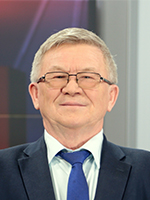
D. B. Ikramov
Military University named after Prince Alexander Nevsky of the Ministry of Defense of the Russian Federation
Russian Federation
Russian Federation
Ikramov Dmitrii Burkhanovich – Cand. Sci. (Soc.), Lecturer
Moscow
References
1. Akhremenko, A. S., Stukal, D. K., & Petrov, A. P. (2020). Network or text? Factors of protest spread in social media: theory and data analysis. Polis. Political Studies, (2), 73-91. (In Rus.) https://doi.org/10.17976/jpps/2020.02.06
2. Berger A.A. (2018). Media and Communication Research Methods (4th ed.). London: SAGE.
3. Brennen B.S. (2017). Qualitative Research Methods for Media Studies. New York: Routledge.
4. Burgoon J.K. (1993). Interpersonal Expectations, Expectancy Violations, and Emotional Communication // Journal of Language and Social Psychology. Vol. 12. No. 1–2. P. 30–48.
5. Creswell J.W., Plano Clark V.L. (2017). Designing and Conducting Mixed Methods Research. London: SAGE.
6. Denzin N.K. (2009). The Research Act: A Theoretical Introduction to Sociological Methods. New Brunswick: Transaction Publishers.
7. Deviatko I.F. (2006). Metody sotsiologicheskogo issledovaniya [Methods of sociological research]. Moscow: KDU. 320 p. (in Rus.).
8. Dridze T.M. (1984). Tekstovaya deyatel'nost' v strukture sotsial'noy kommunikatsii [Textual activity in the structure of social communication]. Moscow: Nauka. 268 p. (in Rus.).
9. Durkheim E. (1995). Sotsiologiya. Ee predmet, metod, prednaznachenie [Sociology. Its subject, method, purpose]. Moscow: Kanon. 352 p. (in Rus.).
10. Edelman (2021). 2021 Edelman Trust Barometer. Available at: https://www.edelman.com/trust/2021-trust-barometer
11. Fedotova L.N. (2003). Sotsiologiya massovoy kommunikatsii [Sociology of mass communication]. Moscow: Aspekt Press. 400 p. (in Rus.).
12. Flick U. (2018). An Introduction to Qualitative Research. London: SAGE.
13. Fomicheva I.D. (2007). Sotsiologiya SMI [Sociology of mass media]. Moscow: Aspekt Press. 335 p. (in Rus.).
14. Hovland C.I., Weiss W. (1951). The Influence of Source Credibility on Communication Effectiveness. Public Opinion Quarterly. Vol. 15. No. 4, pp. 635–650.
15. Jowett G.S., O’Donnell V. (2019). Propaganda & Persuasion (7th ed.). Thousand Oaks, CA: SAGE. 488 p.
16. Katz E., Lazarsfeld P.F. (1955). Personal Influence: The Part Played by People in the Flow of Mass Communications. Glencoe, IL: Free Press.
17. Kelman H.C. (1999). The interdependence of Israeli and Palestinian national identities. Journal of Social Issues. Vol. 55. No. 3, pp. 581-600.
18. Korkonosenko S.G. (2004). Sotsiologiya zhurnalistiki [Sociology of journalism]. Moscow: Aspekt Press. 318 p. (in Rus.).
19. Neuman W.L. (2014). Social Research Methods: Qualitative and Quantitative Approaches (7th ed.). Harlow: Pearson. 598 p.
20. Noelle-Neumann E. (1984). The Spiral of Silence: Public Opinion – Our Social Skin. Chicago: University of Chicago Press. 277 p.
21. Pariser E. (2011). The Filter Bubble: What the Internet Is Hiding from You. New York: Penguin Press.
22. Petty R.E., Cacioppo J.T. (1986). The Elaboration Likelihood Model of Persuasion. Advances in Experimental Social Psychology. Vol. 19, pp. 123-205.
23. Robertson R. (1995). Glocalization: Time-Space and Homogeneity-Heterogeneity // Global Modernities / ed. by M. Featherstone, S. Lash, R. Robertson. London: SAGE. P. 25–44.
24. Ross L., Greene D., House P. (1977). The «false consensus effect»: An egocentric bias in social perception and attribution processes. Journal of Experimental Social Psychology. Vol. 13. No. 3, pp. 279-301.
25. Sherif M., Hovland C.I. (1961). Social judgment: Assimilation and contrast effects in communication and attitude change. New Haven: Yale University Press.
26. Steindl C., Jonas E., Sittenthaler S., Traut-Mattausch E., Greenberg J. (2015). Understanding Psychological Reactance: New Developments and Findings. Zeitschrift für Psychologie. Vol. 223. No 4, pp. 205-214.
27. Stouffer S.A., Suchman E.A., DeVinney L.C., Star S.A., Williams R.M. (1949). The American Soldier: Adjustment During Army Life. Vol. 1. Princeton: Princeton University Press.
28. Sunstein C.R. (2017). #Republic: Divided Democracy in the Age of Social Media. Princeton: Princeton University Press.
29. Tatarova G.G. (1998). Metodologiya analiza dannykh v sotsiologii (vvedenie) [Methodology of data analysis in sociology (introduction)]. Moscow: Nota Bene. 224 p. (in Rus.).
30. Tuten T.L., Solomon M.R. (2017). Social Media Marketing (3rd ed.). London: SAGE.
31. Yadov V.A. (1999). Strategiya sotsiologicheskogo issledovaniya. Opisanie, ob’yasnenie, ponimanie sotsial’noy real’nosti [Sociological research strategy. Description, explanation, understanding of social reality]. Moscow: Dobrosvet. 596 p. (in Rus.).
Review
For citations:
Ikramov D.B. Current issues in the sociological support of the development of communication strategies (in the context of armed conflicts). Communicology. 2026;14(2):60-72. (In Russ.) https://doi.org/10.21453/2311-3065-2026-14-2-60-72
Views:
232
JATS XML



 Email this article
